

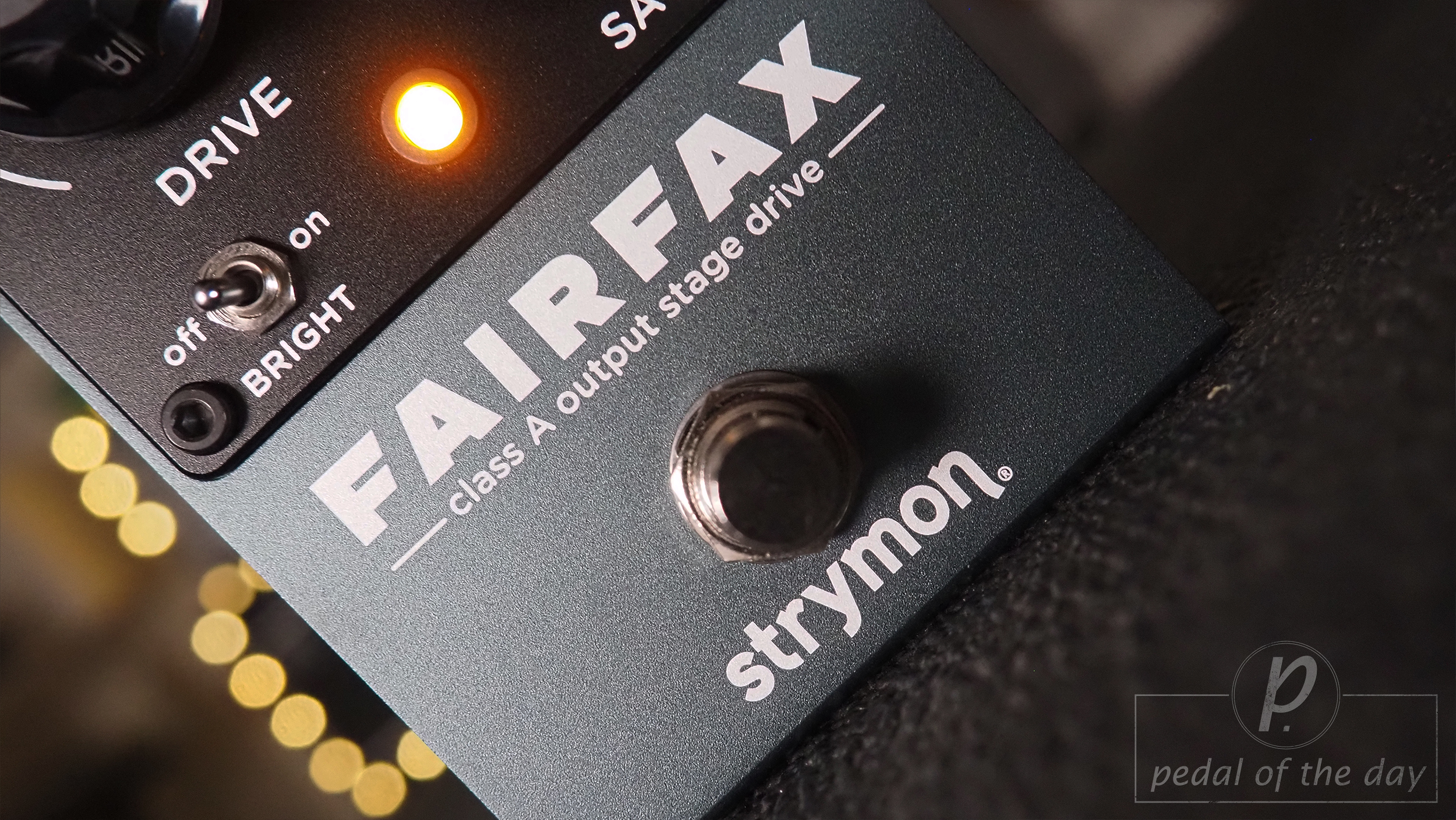
When I first saw today’s pedal from Strymon, the Fairfax Class A Output Stage Drive, I said to myself, “Where are all the knobs and switches??” With just three knobs and one switch, this pedal doesn’t seem like a true Strymon creation…at first. Once you dive into it, you will see and hear the obvious time and effort that their engineers put into making this thing. One of those pedals that makes you do that curious, satisfied head-tilt thing the moment you plug it in, Fairfax isn’t your typical overdrive unit…nor should it be from this crew.

Fairfax isn’t really a distortion pedal. Instead, it’s a complete miniature amplifier in 100% analog form, based upon a little-known device from the 60’s that powered a number of classic rock anthems. The sound and feel is extremely tube-like, with added harmonics and saturation coming from a clever circuit that emulates the critical behavior of a tube amp’s output transformer. It’s a drive pedal that feels completely natural to play, retains the natural sound of your guitar, and glues notes together in a truly organic way.
Fairfax began as an engineering experiment, initially inspired by the original Garnet Amplifiers Herzog® tube drive unit designed for Randy Bachman in 1965. Strymon’s analog guys decided to try and recreate all of the critical elements of a custom Champ-like tube amp circuit fully in the analog domain, but small enough to fit into a pedal enclosure (so it couldn’t use real tubes or an output transformer). The final design features a cleverly miniaturized tube preamp, Class A power amp and an ingenious custom circuit that emulates the saturation characteristics of the output transformer (which is absolutely vital to get the sound right). There’s even a variable Sag circuit that behaves just like a real tube amp does. At low Sag values the behavior is mild and only slightly compressed, and at max values the JFETs can go crazy and unbias — which gates the signal — leading to spitting and chortling sounds more commonly associated with fuzzes.
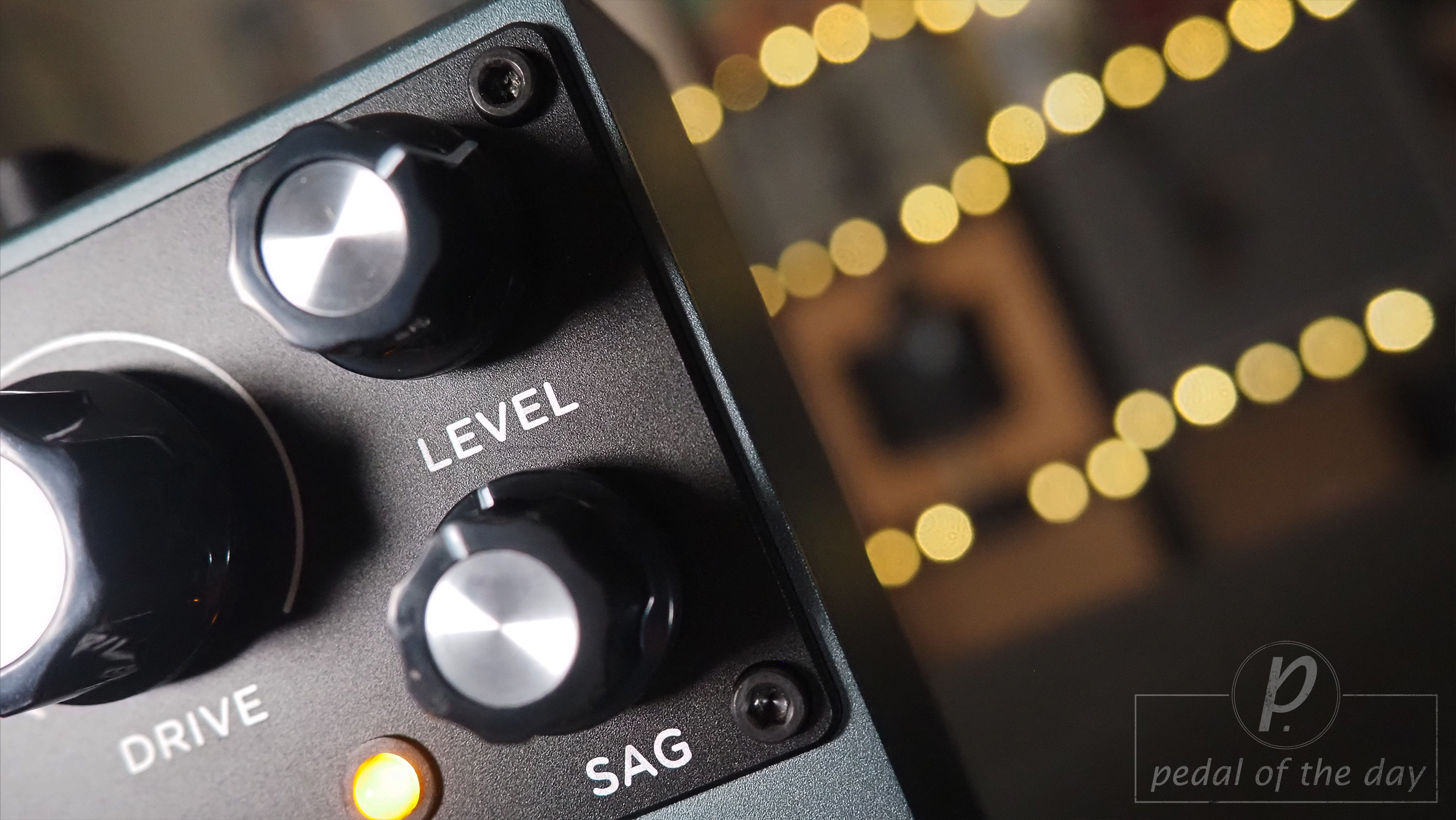
In order for Fairfax to behave like a real amplifier it needed a massive amount of operating voltage, so a transformer-based power supply converts the 9VDC input voltage to 40V internally. This gives Fairfax the power that it needs for high headroom and amp-like feel, allowing for a wide range of tones. At lower Gain settings Fairfax can be sweet, gently pushing the input to your amp with additional harmonic richness, a touch of saturation and a flat frequency response. At higher Gain levels the sound becomes fully saturated, and that large range of gain on tap allows Fairfax to be used in nearly any setup imaginable.
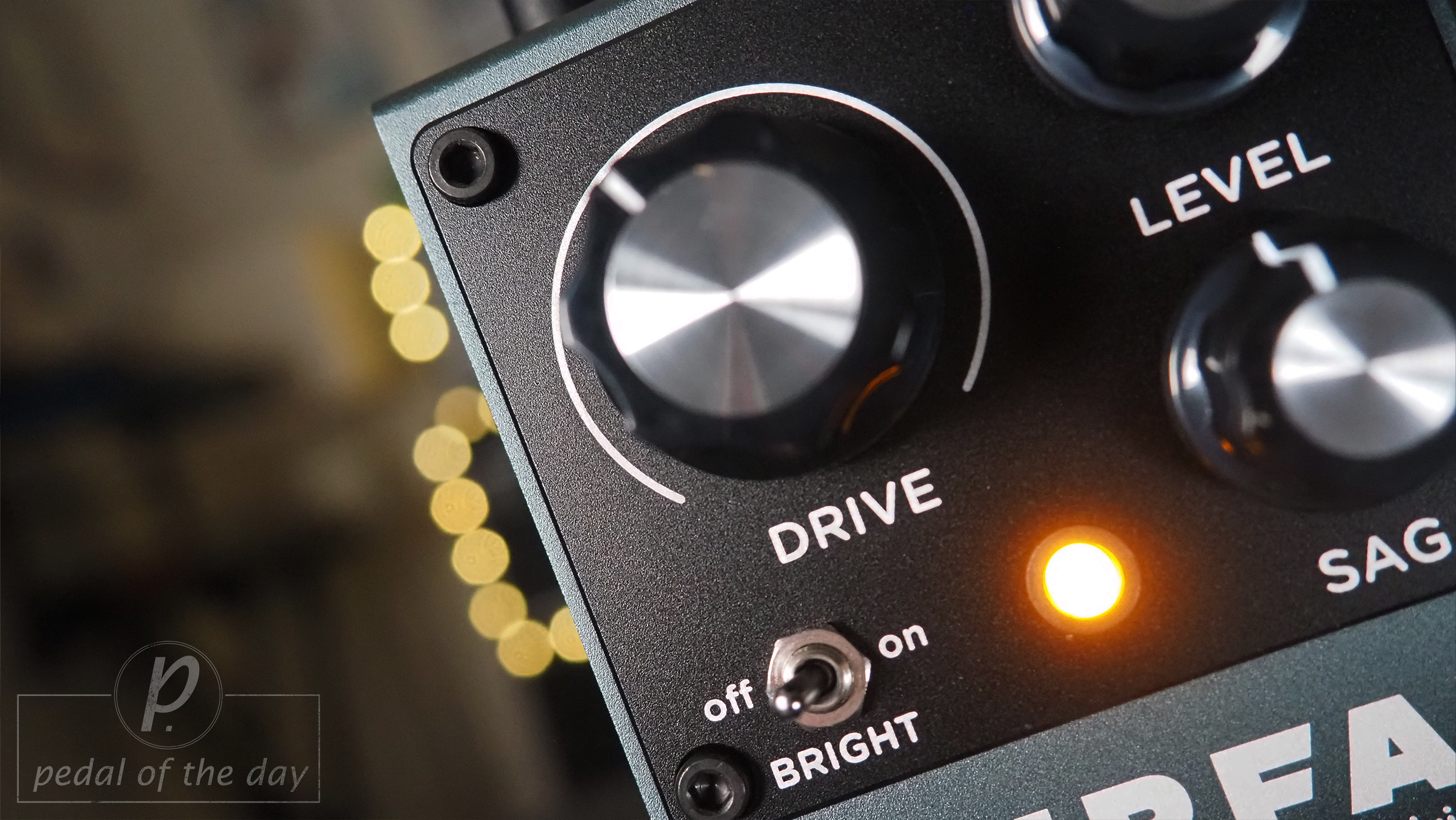
The Fairfax Class A Output Stage Drive is the first of the designs you’ll be seeing in ‘Series A’ from Strymon, which are intended to offer something different from their traditional offerings, with no MIDI, USB, firmware or digital processing. These will be pedals that are unabashedly analog, which means it could get really interesting! Keep an eye out for more ‘Series A’ pedals moving forward, head to the Strymon website for more info on this first gorgeous creation, and don’t forget to head to our YouTube channel for a fun demo we did – cheers!!






How to Choose Your Guitar Pedals – https://sweetwater.sjv.io/QORJ7z
How to Match a Cab to Your Amp Head – https://sweetwater.sjv.io/nLjj7V
How to Break In a Guitar Speaker – https://sweetwater.sjv.io/4PRR10
GET EXCLUSIVE UPDATES, CONTEST INFO, SEE
OUR LATEST DEMO VIDEOS AND MORE: